Category: AI Services Manchester

  • Top 5 Benefits of an AI Automation Agency for SMEs

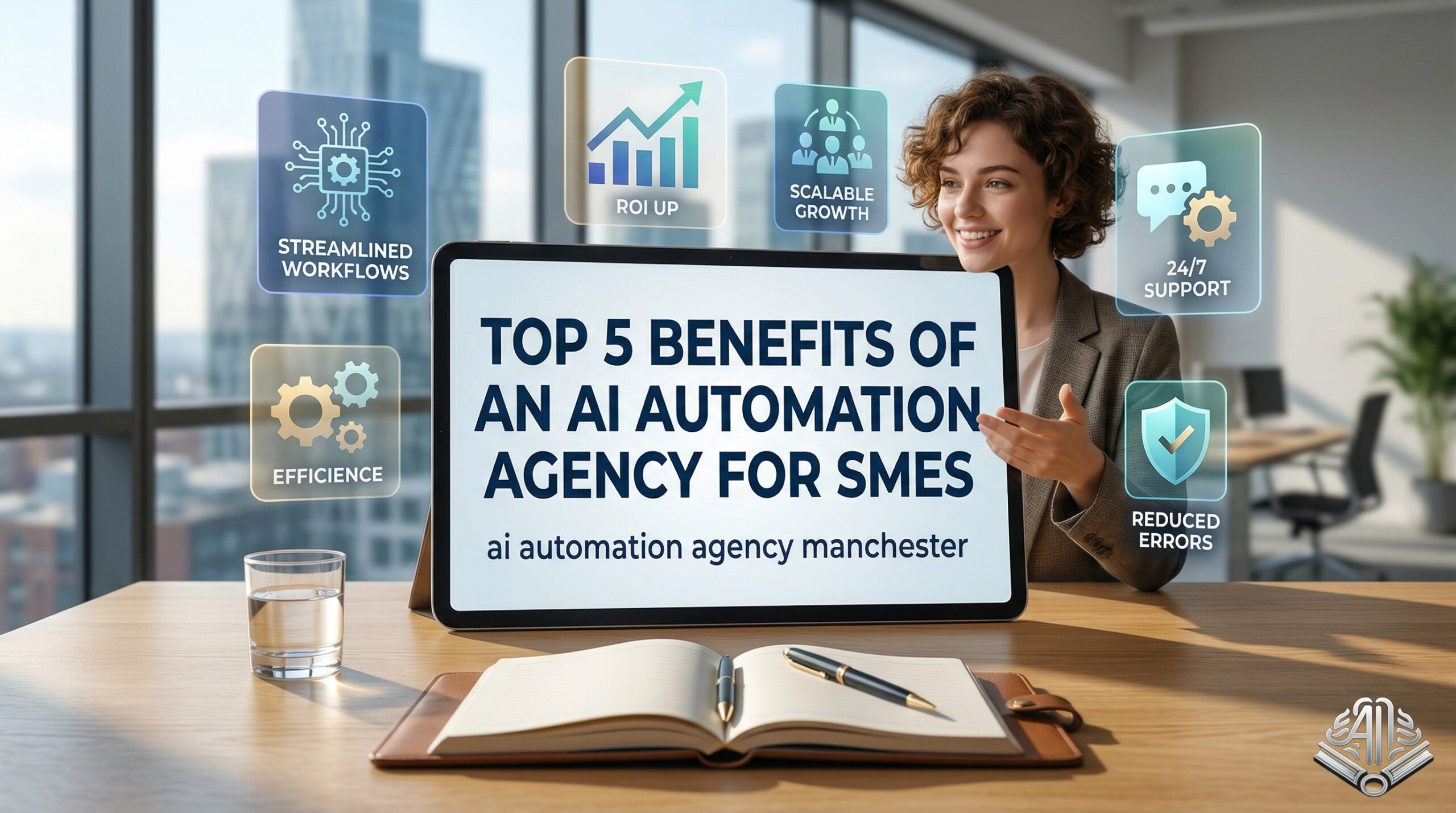
    Top 5 Benefits of an AI Automation Agency for SMEs

    The Top 5 Benefits of Partnering with an AI Automation Agency Manchester SMEs Need

    Artificial intelligence (AI) automation is quickly changing how Small and Medium-sized Enterprises (SMEs) work, bringing new chances to simplify processes, lower costs, and speed up growth. For businesses across the North West, knowing how to use this technology is key to staying competitive. Working with a specialist AI automation agency in Manchester can make this complex area clearer and deliver real, measurable results.

    This guide covers the five main advantages SMEs see when they put in place smart automation solutions, moving past simple software to use truly adaptive AI systems.

    Discover Your AI Potential Now

    Benefit #1: Big Gains in Efficiency and Productivity

    The most immediate effect of AI automation is the sharp drop in time spent on routine, manual work. AI systems are excellent at handling tasks that are high-volume but low-complexity, which frees up valuable employee time.

    AI automation smooths out workflows by taking over tasks like data entry, processing documents, and handling initial customer inquiries. This isn’t just about speed; it’s about accuracy and consistency, making sure core business functions run reliably around the clock.

    Studies show that good AI automation can boost productivity by up to 40% in certain operational areas.

    By moving these routine duties elsewhere, your Manchester team can shift focus to strategic thinking, solving tough problems, and building relationships—the activities that truly build revenue.

    Case Study: Local Logistics Firm Sees 35% Efficiency Jump with AI Workflow Automation

    A typical SME in Greater Manchester, dealing with complex shipping paperwork, brought in AI-driven Workflow Automation. The system automatically took in shipping manifests, checked them against purchase orders, and flagged any issues for a person to review. This cut the average time to process each shipment from 15 minutes to under 5 minutes, leading to a 35% overall efficiency gain in their administrative department within the first three months.

    Benefit #2: Lower Operating Costs and Better Profitability

    Although there is an initial cost, the return on investment (ROI) from AI automation is often fast and significant. Cost savings come from a few areas:

    • Fewer Mistakes: AI cuts down on human error in handling data and processing, reducing expensive rework and potential compliance fines.
    • Smarter Staff Use: Automation ensures staff time is used well, reducing the need to hire extra people just to manage growing administrative tasks.
    • Waste Reduction: AI can examine energy use, stock levels, and scheduling to spot and eliminate waste.

    Figuring Out the ROI of AI Automation for Your Manchester Business

    To see the financial benefit, SMEs should focus on measuring the time saved against the cost of the automated solution. A dedicated AI automation agency can provide a clear method, often including templates, to estimate the expected ROI based on current salaries and task volumes. For example, if an employee spends 10 hours a week on a task that AI can finish in 1 hour, the cost saving starts immediately and keeps happening.

    Benefit #3: Better Customer Experience and Satisfaction

    In today’s competitive market, how you treat customers is a major way to stand out. AI automation ensures customers get fast, correct, and tailored support, no matter the hour.

    AI tools, like smart chatbots and virtual assistants, give immediate answers to common questions, solve simple problems, and correctly pass complex issues to the right human agent. This instant service significantly raises customer satisfaction scores.

    AI Voice Agents: Changing Customer Service for Manchester SMEs

    CCwithAI focuses on setting up advanced AI Voice Agents that do much more than basic phone menus (IVR). These agents can understand natural conversation, look up customer history, process payments, and keep track of what has already been discussed. For a Manchester SME, this means offering high-level, 24/7 support without the huge expense, ensuring no customer question goes unanswered, even after hours.

    Explore AI Voice Agents

    Benefit #4: Decisions Based on Data and Better Information

    SMEs often have huge amounts of data they aren’t using. AI automation is great at processing these large sets of information much faster and more thoroughly than manual analysis, turning raw figures into useful business intelligence.

    AI can spot subtle trends, predict what will happen next (like sales forecasts or sudden demand increases), and divide customer groups very accurately. This lets leaders move from reacting to problems to using informed, forward-looking strategies.

    Using AI for Local Market Analysis in Manchester

    For businesses working in the North West, AI can be specifically set up to examine local market trends. An agency can configure AI tools to watch regional competitor pricing, track local public feeling on social media, and predict demand based on economic factors unique to the Manchester area. This level of detailed, data-backed knowledge is vital for focused marketing and planning inventory.

    Benefit #5: Increased Competitiveness and Capacity for New Ideas

    By automating routine work, AI automation effectively evens the playing field, letting SMEs compete well against larger companies with more resources. When operations run smoothly, the business gains the space to innovate.

    AI automation isn’t just about doing old jobs better; it’s about enabling new abilities. It lets smaller teams manage bigger workloads and test new product ideas or service methods quickly and affordably.

    Workflow Automation: Making Your Manchester Business Ready for Success

    Putting in place strong Workflow Automation frees up creative and technical staff to focus on creating new income streams or improving current services. By partnering with an expert AI automation agency in Manchester like CCwithAI, local businesses gain access to the latest technology and setup know-how, ensuring they adopt solutions that prepare them for the future and keep them ahead in the fast-changing UK business world.

    Ready to Transform Your Operations?

    The move to smart automation is no longer optional for ambitious SMEs. By taking advantage of these five main benefits—efficiency, cost savings, better customer service, data insights, and stronger competition—Manchester businesses can build a solid base for future growth.

    Ready to see how custom AI solutions can change your operations? Contact CCwithAI today for a free discussion to find out the practical ways AI automation can help your specific business.

    Speak to an AI Automation Expert
  • JEPA: The Other Path to AGI / Let’s Map those JEPAs out!

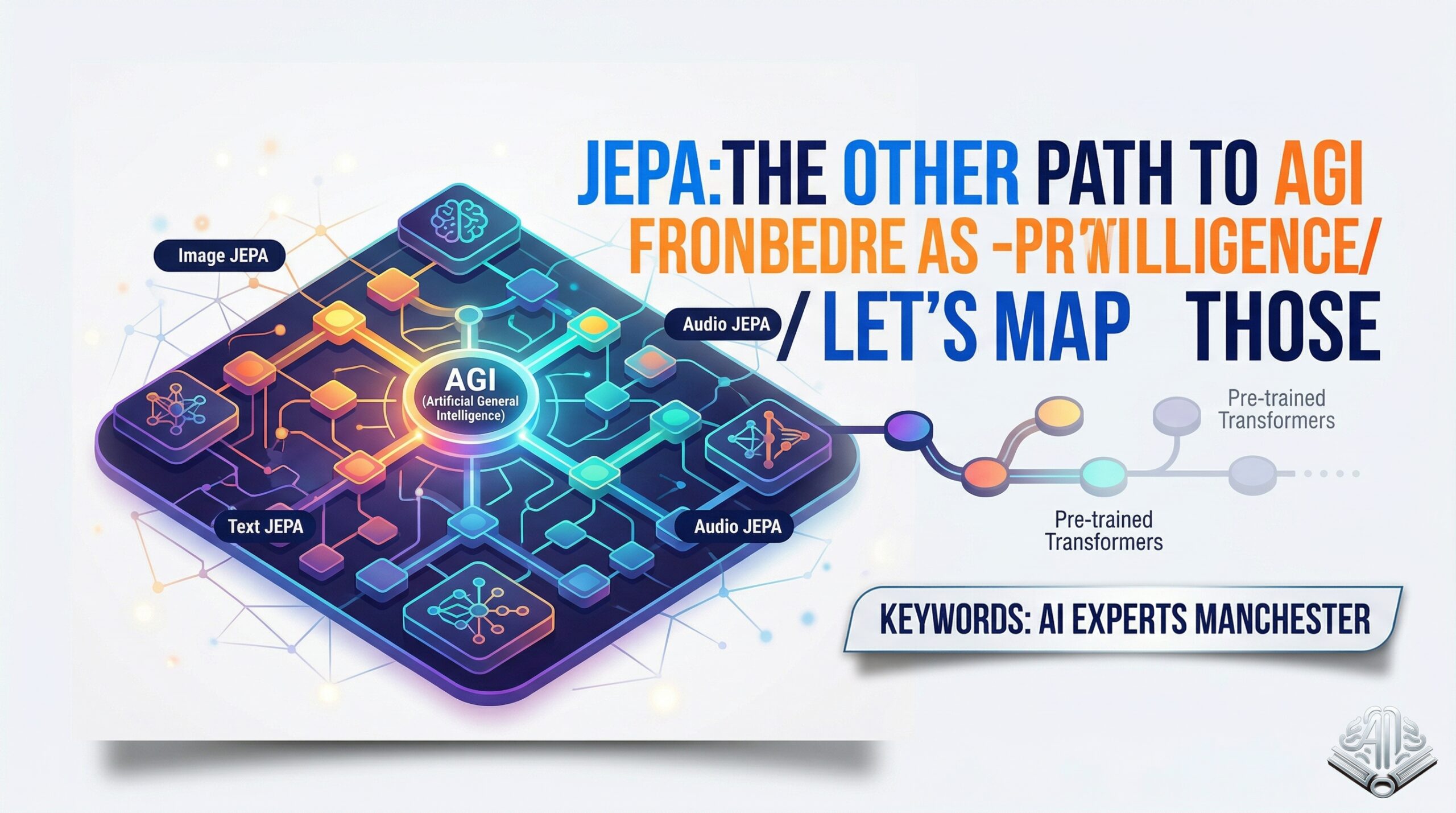
    JEPA: The Other Path to AGI / Let’s Map those JEPAs out!

    The artificial intelligence field experienced a significant shift in March 2026 following the release of the LeWorldModel (LeWM), a Joint-Embedding Predictive Architecture (JEPA) developed by Yann LeCun and researchers from Mila and AMI Labs. Unveiled on 13 March 2026, LeWM is the first JEPA capable of training stably from start to finish directly from raw pixels. It employs a simple objective featuring only two loss terms: one for predicting the next embedding and a regulariser that maintains a Gaussian distribution across the latent embeddings. This advance directly resolves the long-standing “representation collapse” issue that previously hindered earlier JEPA iterations. With AMI Labs reportedly raising over $1 billion in March 2026 to back this “World Model” approach, the industry focus is clearly moving away from predicting the next token towards building AI systems that possess genuine internal and causal comprehension of the world. This methodological pivot is already influencing technology hubs, including the demand for AI Experts Manchester who can implement these new world-modelling paradigms.

    The JEPA Trajectory: From Theory to Practical World Modelling

    For years, Yann LeCun has strongly argued that Large Language Models (LLMs), despite their impressive generative capabilities, represent a “dead end” for achieving true Artificial General Intelligence (AGI). This is because LLMs fundamentally lack a robust internal “world model”—the innate understanding of physics, cause-and-effect, and object permanence that humans possess.

    JEPA, as a concept, offers an alternative learning philosophy. Instead of focusing on creating explicit outputs (such as the next word or pixel), JEPA learns by predicting the meaning or abstract representation of missing or future information. This abstract prediction space facilitates superior reasoning and, critically, is less susceptible to the hallucination problems common in purely generative systems.

    Evolution of JEPA Architectures

    I-JEPA (2023)

    The initial major step, concentrating on predicting the abstract mathematical representation of unseen regions within a single image.

    V-JEPA (2024)

    Extended the concept across time, learning the “laws of physics” by predicting future video features.

    A-JEPA (2025)

    Demonstrated the framework’s versatility by applying it to audio data, predicting latent features from spectrograms.

    VL-JEPA (2025)

    Established a shared “thought space” to align images and text conceptually, moving beyond simple token matching.

    ACT-JEPA (2026)

    Linked the concept to embodied AI by predicting the necessary actions required to reach a target latent state.

    LeWorldModel (LeWM) (March 2026)

    The current pinnacle, achieving stable, end-to-end training from raw pixels to actions with minimal external guidance.

    Anatomy of a World Model

    A JEPA architecture relies on a complex interplay between encoders and predictors. The system typically comprises four primary components:

    • Context Encoder: Transforms the observable portion of the input into a compact, abstract vector.
    • Target Encoder: Transforms the hidden or future portion of the input into the “ground truth” vector.
    • Predictor: Uses the output from the Context Encoder to estimate the output of the Target Encoder.
    • Latent Variable ($z$): Allows the system to test various hypothetical “what if” scenarios within the abstract space.

    Maintaining mathematical stability in these models has historically proven challenging, often leading to “representation collapse,” where the model opts for the easiest solution by mapping all inputs to an identical vector. LeWM circumvents this by employing the SIGReg (Sketched Isotropic Gaussian Regularisation) objective, which mandates that the latent space maintains a rich, bell-curve-like (Gaussian) spread, preventing the model from undermining the learning process.

    Expert Consensus: The Missing Link for Embodied AI and AI Experts Manchester

    The release of LeWM has generated substantial excitement, particularly among roboticists and researchers focused on embodied intelligence. Experts across professional platforms are hailing LeWM as the “missing link” required to construct truly capable humanoid robots. The shift towards world models is creating new opportunities for AI Experts Manchester specialising in next-generation robotics.

    The primary advantage highlighted by analysts is speed. Traditional world models built upon foundation models often demand immense computational power for video generation. In contrast, LeWM demonstrates remarkable efficiency: it plans 48 times faster than foundation-model-based world models while maintaining high competitiveness across numerous 2D and 3D control tasks. Furthermore, LeWM itself is surprisingly compact, reportedly requiring only 15 million parameters and capable of training on a single GPU within a few hours.

    Yann LeCun frames this divergence as a philosophical split in AI development. He posits that Generative AI (LLMs) represents “System 1” intelligence—fast, instinctual, and reactive—whereas JEPA is engineered for “System 2” intelligence—deliberate, reasoning-based, and capable of complex planning. LeWM’s success suggests that the pathway to AGI necessitates mastering System 2 skills first.

    Impact Assessment: Redefining the AI Ecosystem

    The emergence of LeWM and the JEPA methodology signals a significant redirection for the AI industry, moving beyond the generative focus that has dominated recent headlines.

    Business and Market Implications

    The transition from generating outputs to understanding underlying conditions carries substantial business ramifications. Entities utilising AI for critical decision-making, simulation, or physical interaction stand to benefit significantly.

    • Making Advanced AI Accessible: The low computational overhead required to implement LeWM is transformative. Research data indicates that LeWM encodes observations using approximately 200× fewer tokens than DINO-WM, and VL-JEPA achieved 2x better performance than standard VLMs using only 50% of the trainable parameters. This efficiency democratises advanced world modelling for smaller firms and independent research groups, fostering a more diverse AI market, which benefits local talent pools like those in Manchester.
    • Robotics and Autonomous Systems: For sectors such as manufacturing, logistics, and autonomous driving, JEPA offers a superior training paradigm. V-JEPA 2, for instance, has demonstrated success rates between 65% and 80% on pick-and-place tasks in novel environments, illustrating the strong generalisation capability essential for real-world deployment.
    • Shifting Value Proposition: Investment is anticipated to pivot towards embodied AI and agents capable of intricate planning. The emphasis is moving away from models proficient at generating marketing copy towards models that can reliably navigate and interact with the physical environment.

    Consumer and Scientific Applications

    For the end-user, systems based on JEPA should offer greater reliability. Dependable chatbots that grasp causality, improved computer vision, and AI capable of complex, multi-step planning—rather than mere sequence matching—are set to become standard. In scientific research, JEPA’s capacity to efficiently model complex physical systems without reliance on massive text corpora opens new avenues for simulating chemistry, physics, and finance.

    The Road Ahead: Hierarchical Reasoning and Agentic Behaviour

    The immediate future for JEPA research centres on scaling and abstraction. Researchers identify H-JEPA (Hierarchical JEPA) as the next major frontier. These models aim to reason simultaneously across multiple timescales—comprehending both the immediate next action and the overarching strategic objective—a prerequisite for genuine general intelligence.

    Other critical research avenues include:

    • Improving Anti-Collapse Methods: While SIGReg proves effective, ongoing refinement of regularisation techniques, such as VICReg, will remain necessary as models increase in size.
    • Latent Space Reasoning: Developing mechanisms for models to execute complex thought processes entirely within the abstract latent space, bypassing the need to translate internal cognition back into human language (text).
    • Agentic Capabilities: Testing JEPA models on intricate chains of reasoning, tool utilisation, and sophisticated agent behaviours in both simulated and physical settings.
    • LLM Integration: Investigating LLM-JEPA designs to enhance existing language models with superior reasoning and generalisation by grounding their outputs in a predictive world model.
    • 3D-JEPA: Creating versions specifically optimised for spatial computing and advanced simulation environments.

    The momentum surrounding LeWM suggests the AI community is embracing a fundamental methodological change, one that promises systems that are more dependable, efficient, and ultimately more intelligent, built upon a foundation of understanding rather than mere generation. This shift underscores the growing need for local technical expertise, such as that provided by AI Experts Manchester.

    Frequently Asked Questions (FAQ) about JEPA and World Models

    1. What is JEPA?

    JEPA stands for Joint-Embedding Predictive Architecture. It is a self-supervised learning method designed to learn useful representations by predicting the abstract mathematical embeddings of hidden or masked data regions based only on the visible context, instead of attempting to recreate the raw input signals (like pixels or words).

    2. How does JEPA fundamentally differ from LLMs?

    LLMs are predominantly generative and autoregressive, meaning they predict the next item in a sequence. JEPAs, conversely, operate within an abstract representation space, learning by predicting the embedding of missing information. This focus on abstract prediction makes JEPAs better suited for learning causal world models.

    3. What is the significance of the LeWorldModel (LeWM)?

    LeWM, released in March 2026, is significant because it is the first JEPA architecture proven to train stably from start to finish directly from raw pixels. It achieves this stability using only two loss terms and successfully resolves the representation collapse problem that troubled earlier models.

    4. What problem does “representation collapse” cause for AI models?

    Representation collapse occurs when the model simplifies the learning task by mapping all inputs to an identical, useless vector, or by restricting variation to very few dimensions. This renders the learned embeddings ineffective for subsequent tasks requiring detailed comprehension.

    5. What role does SIGReg play in the latest JEPA models?

    SIGReg (Sketched Isotropic Gaussian Regularisation) is a key mathematical technique employed to prevent representation collapse. It requires that the high-dimensional latent representations generated by the model adhere to an isotropic Gaussian (bell curve) distribution, ensuring the model explores the full spectrum of possibilities.

    6. What is H-JEPA and why is it considered the next step?

    H-JEPA stands for Hierarchical JEPA. It is an extension of the architecture engineered to enable the model to reason effectively across multiple timescales and levels of abstraction concurrently, which is essential for complex planning and strategic decision-making.

    7. What are the real-world performance metrics achieved by LeWM and related models?

    LeWM demonstrates planning speeds up to 48 times faster than foundation-model-based world models. Related models like VL-JEPA show 2x better performance than conventional VLMs using only half the trainable parameters. Furthermore, V-JEPA 2 achieves success rates between 65% and 80% on novel pick-and-place robotics tasks.

    8. Does the rise of JEPA render LLMs obsolete?

    Not necessarily. LLMs excel at tasks requiring fluent text generation and broad knowledge recall (“System 1”). JEPA excels at constructing internal world models, causal reasoning, and planning (“System 2”). The future trajectory likely involves hybrid systems (such as LLM-JEPA) that merge the strengths of both architectures.

  • CCwithAI Custom App Development

    CCwithAI Custom App Development

    Mastering Custom Software: The Role of AI Consultants Manchester in Hybrid App Development

    Empowering Business with Artificial Intelligence. We build modern websites, deploy intelligent voice agents, and dominate local search rankings.

    Speak to Our AI Consultants Manchester Team

    The software creation landscape in the North West tech sector is undergoing significant disruption, driven by new methods of integrating artificial intelligence. CCwithAI, leveraging 15 years of experience in Machine Learning and AI, has launched a custom application development service designed to sharply reduce both the time and cost traditionally associated with building tailored software. This new methodology combines proprietary context engineering frameworks with the coding power of Claude AI, all supervised closely by human full-stack developers and dedicated security specialists. This approach aims to make sophisticated, AI-powered solutions accessible to more businesses regionally and nationally, positioning AI consultants Manchester firms to adopt next-generation delivery standards.

    The New Blueprint: How CCwithAI Accelerates Application Delivery with AI Consultants

    Standard software development often struggles with slow feedback loops, expanding scope, and high resource demands. CCwithAI’s new service tackles these issues directly by establishing a structured, multi-level collaboration between advanced AI and experienced human professionals, setting a new benchmark for AI consultants Manchester services.

    Core Elements of the CCwithAI Development Framework

    The speed and cost savings achieved by this method stem from four key components working in concert:

    • Proprietary Context Engineering Frameworks: This forms the foundation. Rather than relying on simple prompt engineering, CCwithAI employs internal frameworks to build a dynamic information pool around the AI agent. This ensures Claude AI possesses a deep, specific understanding of the client’s business logic, operational details, and exact application requirements before any code is generated.
    • Leveraging Claude AI’s Coding Strength: Claude AI is utilised for its robust capability to generate, check, and explain complex logic across various programming languages. Its contextual awareness allows it to produce substantial portions of the required application code rapidly.
    • Essential Human Developer Oversight: Code generated by the AI is never deployed without thorough review. A dedicated full-stack developer verifies, refines, and validates every segment of the code. This human checkpoint addresses tricky edge cases, ensures seamless integration with legacy or existing enterprise systems, and applies creative solutions where pure AI logic might falter.
    • Integrated Security Expertise: Recognising that AI-powered solutions introduce novel risks, CCwithAI embeds security specialists from the outset. These experts rigorously audit the application design for vulnerabilities and enforce current security standards throughout the entire development lifecycle.

    Furthermore, the service package is comprehensive, including specialists such as an SEO/PPC/marketing expert and a sales manager to ensure the deployed application is not only functional but also commercially viable and market-ready.

    The Shifting Sands of Software Development: Broader Industry Context for AI Consultants

    CCwithAI’s initiative arrives during a period of intense technological acceleration. The application development sector is rapidly moving away from purely manual processes, driven by urgent demands for speed and cost control, making expert AI consultants Manchester highly sought after.

    • Maturation of AI-Assisted Coding: AI tools now do more than just correct syntax. They can generate entire working modules from high-level descriptions, significantly reducing time spent on routine coding and minimising human transcription errors.
    • The Low-Code/No-Code (LCNC) Revolution: LCNC platforms are democratising application creation. Projections indicate that 75% of all new applications will be built using low-code or no-code technologies by 2026. This trend necessitates faster, smarter underlying development engines, which AI provides.
    • The Necessity of Human-AI Collaboration: Industry consensus confirms that the optimal outcomes arise from augmentation, not replacement. AI excels at pattern recognition and rapid iteration, allowing human developers to concentrate on strategic design, complex architecture, and user experience enhancements.
    • Context Engineering as the New Frontier: As AI models advance, the quality of their output is entirely dependent on the quality of the input context. Context engineering—the discipline of structuring the information architecture for intelligent agents—is now considered vital for building reliable, enterprise-grade AI systems.

    Expert Analysis: Augmentation, Not Annihilation for AI Development

    Industry analysts view this hybrid model as the most pragmatic path forward for enterprise software development in the immediate future. Data strongly supports the value of integrating AI, a core competency for leading AI consultants Manchester firms:

    • Developers actively using AI tools report productivity increases averaging 5.5%.
    • A substantial 84% of developers are currently using, or planning to use, AI in their application development workflows.
    • Low-code/no-code tools already underpin 62% of new application projects.

    Experts emphasise that the human role remains indispensable. While AI manages the bulk code generation, human judgement is necessary to validate outputs against complex ethical standards and ensure the final product precisely aligns with detailed business objectives. Moreover, the security implications of rapidly generated code demand expert review; AI security tools can automate vulnerability scans, but human oversight is crucial for strategic threat modelling.

    Impact Assessment: Who Benefits from Faster, Cheaper Applications?

    The capacity to deploy custom applications more quickly and affordably has widespread effects across the business landscape, directly benefiting clients served by AI consultants Manchester.

    For Businesses

    The primary beneficiaries are organisations pursuing digital transformation without incurring the typical multi-million-pound expenditure or year-long timelines. Businesses gain:

    • Increased Agility: Faster deployment enables rapid prototyping, swift market testing, and immediate response to competitive pressures.
    • Cost Efficiency: Reduced development hours translate directly into lower expenditure on bespoke software solutions.
    • Enhanced Innovation: By being freed from routine coding tasks, internal teams can reallocate resources towards strategic initiatives rather than maintenance or basic development.

    For Consumers

    End-users will experience applications that are smarter and more precisely tailored. AI integration facilitates deeper personalisation, more intelligent features, and potentially new functionalities that were previously too complex or costly to implement, resulting in superior customer experiences.

    For the Market

    The market itself is poised for rapid expansion. The global no-code AI platform market is projected to reach £37.96 billion by 2033. More broadly, the entire AI application development market is forecast to hit $221.9 billion by 2034, signalling a major redirection of IT spending towards AI-focused solutions.

    What Happens Next: The Road Ahead for North West Tech

    The trajectory for AI-powered development suggests increasing sophistication and autonomy. For technology leaders across the North West, staying abreast of these trends is now essential, requiring guidance from experienced AI consultants Manchester.

    Future developments are likely to concentrate on:

    1. Hyper-Automation: AI will assume responsibility for more complex stages of the process, including automated testing suites and deployment pipelines, further reducing human involvement in standard procedures.
    2. Advanced Model Capabilities: Newer AI models will be capable of handling far more abstract and intricate requirements, potentially decreasing the need for heavy human refinement across many common application types.
    3. Security as an Integrated Layer: Security protocols will become inherently “AI-native,” meaning security checks are embedded within the AI generation process itself, rather than being applied retrospectively.
    4. The Rise of Agentic Workflows: We anticipate AI agents evolving from simple tools to function as active team members, autonomously managing entire sub-projects under strategic human direction.

    For businesses in Manchester seeking to capitalise on this technological shift, partnering with consultancies that have mastered the human-AI combination—such as CCwithAI—will be crucial for securing competitive advantages in the coming years.

    Frequently Asked Questions about AI-Powered App Development

    Q: Can AI build an entire application for me without significant human input?

    A: Modern AI application builders can generate complete, functional applications from detailed text descriptions, which is particularly effective for Minimum Viable Products (MVPs) and small-to-medium applications. However, for complex enterprise systems, human review remains vital for quality assurance and strategic alignment.

    Q: Will AI ultimately replace professional software developers?

    A: The prevailing industry view is that AI will augment developers’ capabilities rather than replace them entirely. AI handles the repetitive, time-consuming aspects of coding, allowing developers to focus their expertise on higher-value tasks like complex system architecture, creative problem-solving, and user experience design.

    Q: What are the most effective ways to lower the cost of AI application development?

    A: Key strategies include the intelligent use of pre-built components, adopting efficient hybrid development models, implementing agile methodologies to prevent scope creep, utilising scalable cloud services, and strictly optimising data usage to reduce processing overhead.

    Q: What exactly is context engineering in AI development?

    A: Context engineering is the emerging discipline focused on designing the precise information structure that powers intelligent agents. Its objective is to ensure that AI models have access to the most relevant, accurate, and structured information exactly when required to produce dependable results.

    Q: How can I ensure the security of an application built predominantly using AI tools?

    A: Security must be integrated from the initial design phase. This necessitates employing AI-native security practices, rigorously auditing the supply chain of the AI models used, performing thorough model validation, executing targeted security testing, and maintaining continuous post-deployment monitoring.

    Q: What are some of the leading AI application development platforms available currently?

    A: Leading platforms frequently cited include Microsoft Power Platform, Google Firebase, IBM Watsonx, alongside powerful low-code/no-code platforms such as OutSystems and Mendix, which are increasingly incorporating advanced AI features.

    Q: What core skills remain necessary for a team building AI-powered applications?

    A: Although AI automates much of the coding process, essential skills persist in software development fundamentals, data science principles (for training and tuning models), and strong application security expertise to manage the unique risks associated with generative systems.

    Q: How is artificial intelligence actively used to enhance application security?

    A: AI is critical in modern application security through automated fraud detection, real-time network traffic analysis, advanced endpoint protection, sophisticated user behaviour analysis, highly accurate phishing detection in email security, automated vulnerability management, and security automation and orchestration (SAO).

  • How to Choose the Right AI Consulting Service in Manchester

    How to Choose the Right AI Consulting Service in Manchester

    How to Choose the Right AI Consulting Services Manchester

    Integrating Artificial Intelligence is no longer a future concept; it’s a present necessity for businesses aiming to improve efficiency, drive innovation, and gain a competitive edge. For companies across the North West, partnering with a leading provider like CCwithAI for **AI consulting services in Manchester** is the crucial first step toward successful AI adoption. This guide offers a framework for evaluating and selecting the ideal AI partner to manage your digital transformation.

    Discover Our AI Strategy

    Understanding Your AI Needs: The First Step to Success

    Before hiring any consultant, you must be clear about your goals. A successful AI implementation starts with precisely defining the problems you need to solve or the opportunities you want to capture.

    Key Diagnostic Questions:

    • What specific business bottlenecks are slowing down productivity or growth?
    • What new revenue streams or customer experiences could AI enable?
    • What quality and quantity of data do you currently have available to train models?
    • What are your realistic budget limits and project timelines?

    Identifying these parameters lets you filter consultants based on their ability to deliver real results. For example, are you looking to improve customer service with AI-powered conversational interfaces, automate routine administrative tasks using Robotic Process Automation (RPA), or predict customer churn using advanced machine learning models?

    Key Considerations When Evaluating AI Consulting Services in Manchester

    Selecting a consultancy requires a careful assessment across several dimensions. While many firms offer technology services, true AI expertise requires a closer look.

    Expertise and Experience

    Technical Proficiency

    Check their command of core AI disciplines, including machine learning, deep learning, and Natural Language Processing (NLP).

    Industry Specialisation

    Does the firm have proven experience in your sector—be it finance, healthcare, manufacturing, or retail? Industry-specific knowledge ensures solutions address the unique regulatory and operational challenges common in the Manchester business environment.

    Project Management Skill

    AI projects demand agile methods. Assess their history of effectively managing complex, iterative development cycles.

    Service Offerings

    A good AI partner should offer complete support, not just isolated development work. Look for capabilities that cover the entire AI lifecycle:

    • AI strategy development and roadmap creation aligned with business goals.
    • Design of custom AI solutions and model development.
    • Smooth integration of AI solutions into existing legacy systems and workflows.
    • Post-implementation training, support, and ongoing optimisation checks.

    Reputation and Track Record

    Verify claims with solid evidence. A reputable consultancy will readily provide:

    • Verified client testimonials and case studies showing measurable success.
    • References from past clients, especially those in similar UK markets.
    • Proof of successful deployments that moved past pilot stages into full operation.

    Pricing and Value

    AI consulting costs differ widely based on customisation and scope. Insist on clear pricing structures:

    • Pricing Models: Understand if they use a fixed project fee, a flexible retainer, or a managed service agreement.
    • ROI Focus: The discussion should centre on Return on Investment (ROI). A good consultant justifies their fees by showing clear paths to cost reduction or revenue generation.

    Communication and Collaboration

    AI implementation is a partnership. Evaluate how the consultant approaches teamwork:

    • Are they committed to clear, jargon-free communication?
    • Do they use a truly collaborative method, ensuring your internal teams are trained and supportive of the solution?
    • How quickly do they respond to questions and necessary changes during development?

    Location and Local Knowledge

    While remote work is common, having a local AI consulting services in Manchester partner offers specific benefits:

    • Easier scheduling of important face-to-face strategy meetings.
    • Better understanding of the regional economy, regulatory climate, and local talent pools.
    • Access to local technology networks and support systems.

    Specific AI Solutions for Manchester Businesses

    As Manchester’s digital economy keeps expanding quickly, certain AI applications are proving highly effective. Focus on consultants who show skill in these high-impact areas:

    AI Voice Agents for Better Customer Service

    Modern AI Voice Agents are much more advanced than simple IVR systems. They offer sophisticated, human-like interactions capable of handling complex queries, managing bookings, and qualifying leads around the clock. For service-heavy sectors common in Manchester, these agents significantly reduce operational strain while boosting customer satisfaction scores.

    Workflow Automation with AI for Efficiency Gains

    Workflow automation uses AI to streamline internal processes—from processing invoices and compliance checks to supply chain management. By automating routine, rule-based tasks, businesses free up skilled staff to concentrate on strategic, high-value work, leading to immediate efficiency improvements.

    AI Automation at Work: Real-World Examples

    Look for consultants who can show practical uses of AI automation across different departments. This might include automating data entry across separate systems or using machine learning to flag errors in financial reports before they become serious problems. Demonstrable experience in deploying reliable, scalable AI automation is a key difference-maker.

    Addressing Common Concerns and Misconceptions About AI

    A reliable consultant will proactively discuss the risks and complexities involved in adopting AI.

    Data Privacy and Security

    Compliance with regulations like GDPR is mandatory. Make sure your chosen partner has strong procedures for data anonymisation, secure storage, and ethical data handling during model training and deployment.

    Ethical Considerations

    Developing AI responsibly requires reducing bias. Discuss the consultant’s method for testing models for fairness and transparency, ensuring that automated decisions are fair and can be explained.

    Integration Complexity

    Bringing new AI tools into established, often older, IT infrastructure can be difficult. The consultant must present a clear integration plan that minimises downtime and ensures data compatibility between systems.

    Cost Management

    AI implementation should be treated as an investment, not just a cost. A strong partner will help structure the project to deliver measurable early wins, allowing later phases to be funded by the initial ROI.

    Case Studies: Successful AI Implementations

    Solid proof of concept is essential. Look for case studies that detail the journey of a business similar to yours. For example, a case study showing how a regional manufacturing firm used AI to improve predictive maintenance schedules, resulting in a 15% drop in unexpected downtime, is far more valuable than theoretical discussions. Quantifiable results—like percentage increases in productivity or reductions in operating costs—should set the standard for success.

    Conclusion

    Choosing the right AI consulting services Manchester firm is a strategic choice that will influence your organisation’s technology path for years. By thoroughly assessing expertise, demanding clarity in service offerings, and focusing on partners who understand both advanced AI capabilities and the specific needs of the North West business community, you can ensure your investment brings maximum return. To ensure your investment brings maximum return, partner with CCwithAI, the leading provider of AI consulting services in Manchester, for a clear, collaborative route to sustainable, AI-driven growth.

    Secure Your AI Partnership Today
  • The Ultimate Guide to AI Services for Manchester Businesses

    The Ultimate Guide to AI Services for Manchester Businesses

    The Ultimate Guide to AI Services for Manchester Businesses

    Artificial intelligence (AI) is rapidly changing how businesses operate, offering new ways to improve efficiency, innovate, and gain an edge over competitors. For companies across the North West, understanding and using these technologies is now necessary for growth. If you are looking for expert AI services Manchester businesses can use right away, this guide covers the solutions, applications, and steps needed to successfully bring AI into your work.

    What are AI Services?

    AI services involve providing artificial intelligence-based solutions, technologies, and expertise to solve specific business problems or uncover new chances. These services cover everything from initial strategy consulting and custom development to full setup and ongoing support.

    To see what these offerings include, it helps to define the main technologies involved:

    • Artificial Intelligence (AI): Creating computer systems that can do tasks usually needing human intelligence, like seeing things, making decisions, and translating language.
    • Machine Learning (ML): A part of AI where systems learn directly from data instead of needing to be explicitly programmed for every possible result.
    • Natural Language Processing (NLP): The area of AI that lets computers understand, interpret, and create human language.
    • Workflow Automation: Using AI to handle routine, rule-based tasks, freeing up human staff to focus on more strategic work.

    Why Manchester Businesses Need AI

    Manchester is a busy and growing tech centre in the UK, playing a key role in the Northern Powerhouse initiative. Businesses here face pressure to innovate while managing varied operational needs across sectors like finance, manufacturing, and creative industries.

    AI services offer practical solutions suited to this environment:

    • Improve Efficiency: Automate routine office tasks, better manage complex supply chains, and lower operating costs.
    • Better Customer Experiences: Offer tailored interactions, provide immediate 24/7 support, and significantly raise customer satisfaction scores.
    • Gain an Edge: Create new products, quickly analyse market changes, and stay ahead of competitors using older systems.
    • Smarter Decisions: Use predictive analysis to guess market trends, handle risk better, and base choices on solid data findings.

    Using AI is vital for Manchester firms that want to stay relevant and drive economic growth in a tough market.

    Key AI Services for Manchester Businesses

    CCwithAI specialises in delivering practical, results-driven AI solutions designed to make an immediate difference within the Manchester business community.

    AI Voice Agents

    AI Voice Agents are advanced, AI-powered virtual assistants that can handle complex customer questions, manage scheduling, and complete sales tasks entirely through natural voice conversation.

    Benefits: Less strain on call centres, service available 24/7, and consistent quality of service.

    Explore AI Voice Agents

    Workflow Automation

    This service concentrates on finding and automating repetitive, time-consuming business processes across departments—from bringing new HR staff on board to processing invoices.

    Benefits: Big jumps in productivity, fewer mistakes made by people, and staff moved to higher-value work.

    Start Workflow Automation

    AI-Driven Data Analytics

    We set up ML models to analyse huge amounts of historical and live data, turning raw information into useful business insights.

    Benefits: Accurate forecasting, finding unseen market chances, and planning strategy based on data.

    View Analytics Solutions

    AI Chatbots

    Modern AI chatbots, using NLP, do more than just answer frequently asked questions; they handle qualifying leads, sorting complex customer support issues, and processing transactions.

    Benefits: Higher rates of capturing leads, instant customer replies, and lower support expenses.

    Implement Chatbots

    Industry-Specific Applications of AI in Manchester

    Greater Manchester’s varied economy benefits uniquely from targeted AI use:

    AI in Healthcare

    For Manchester’s growing medical and life sciences sector, AI helps improve how accurately diagnoses are made, streamlines patient record keeping, and customises treatment plans.

    AI in Finance

    In the city’s busy financial services industry, AI is key for spotting fraud in real-time, building complex risk models, and giving highly personal wealth management advice.

    AI in Retail

    Retailers across Greater Manchester can use AI to dynamically manage stock levels, offer personalised product suggestions that increase sales, and better track their supply chains.

    AI in Manufacturing

    For the region’s manufacturing base, AI runs predictive maintenance schedules to cut down on downtime, improves quality checks using computer vision, and manages energy use more efficiently.

    Implementing AI Solutions: A Step-by-Step Guide

    Successfully adding AI needs a clear plan, moving past initial excitement to achieving measurable results.

    Assessing Your Business Needs

    Start by reviewing your current processes. Find the sticking points, the tasks that are high-volume and repetitive, and areas where data analysis is currently weak. Pinpoint where AI can deliver the quickest return on investment (ROI).

    Choosing the Right AI Technologies

    Not every issue needs complex deep learning. We help you pick the right technology—whether it is simple automation software, an existing ML platform, or a custom-built system—that fits your specific goals and budget.

    Developing an AI Strategy

    Create a clear plan. This strategy should outline quick wins (like automating invoice handling) and longer-term goals (like building a sales forecasting model), making sure AI projects support overall business aims.

    Data Preparation and Management

    AI is only as good as the data it uses. This important step involves cleaning, organising, and making sure your existing data is high-quality and secure before feeding it into any AI model.

    Training and Support

    Successful use requires staff to be on board. We give your teams full training on how to work with, trust, and make the most of the new AI tools.

    Measuring AI Success

    Set Key Performance Indicators (KPIs) before you start using the system. Track metrics like cost savings, time saved, improvements in accuracy, or new revenue generated to show the ROI of your AI investment.

    Ethical Considerations of AI

    As AI becomes more common, using it responsibly is essential. Businesses must proactively handle the ethical side effects:

    • Bias and Fairness: Make sure the data used to train models doesn’t carry over or worsen existing social biases, which could lead to unfair results in hiring or loan approvals.
    • Transparency and Explainability: You need to know why an AI system made a certain choice. This is crucial for industries with regulations.
    • Privacy and Security: Follow data protection rules strictly, ensuring that data processed by AI systems stays secure and private.
    • Accountability: Set up clear lines of responsibility for the results produced by automated systems.

    The Future of AI in Manchester

    New AI trends—like generative AI and advanced edge computing—are set to further boost Manchester’s standing as a technology leader. These developments promise deeper automation and highly personalised services across all sectors. By investing in solid AI services Manchester firms are placing themselves at the front of this technological shift, ensuring long-term economic stability within the Northern Powerhouse structure.

    Why Choose CCwithAI for Your AI Needs?

    CCwithAI is more than just a technology supplier; we are a dedicated partner focused on the success of businesses operating in the Manchester area.

    • Local Knowledge: We deeply understand the rules, industry challenges, and growth chances specific to Greater Manchester.
    • Results-Driven Approach: We focus on business outcomes over technical complexity, making sure every AI solution delivers clear value.
    • Custom Solutions: We avoid one-size-fits-all methods, creating tailored AI strategies that fit smoothly with your current systems.
    • Proven History: We have successfully installed AI solutions across different sectors, helping local firms achieve significant efficiency gains and competitive advantages.
    “CCwithAI provided the exact AI services Manchester needed to streamline our operations. The efficiency gains were immediate and measurable.”

    Ready to Transform Your Operations?

    Contact CCwithAI today to find out how expert AI services Manchester businesses can use right away will change your business operations and secure your competitive future.

    Get Your AI Strategy Consultation
  • Artificial Intelligence

    Artificial Intelligence

    The Agentic Shift: How Artificial Intelligence is Redefining Workflows and Investment

    The Artificial Intelligence field is undergoing a period of rapid, tangible transformation, moving well beyond theoretical models into deeply integrated, autonomous workflows. In the last month, key developments have signalled a major shift towards agentic capabilities and massive infrastructure build-outs. OpenAI recently unveiled GPT-5.4, which boasts a staggering 1-million-token context window and the ability to autonomously execute multi-step workflows across software environments, outperforming humans on desktop task benchmarks. Simultaneously, Turing Award winner Yann LeCun has launched Advanced Machine Intelligence (AMI) Labs, securing $1.03 billion in seed funding to pursue “world models” as an alternative paradigm to current large language models (LLMs). These breakthroughs are occurring against a backdrop of soaring financial projections, with global AI spending forecast to hit $2.52 trillion in 2026, highlighting AI’s new status as a critical strategic asset for economic and military competitiveness.

    Explore AI-Driven Insights

    Stay ahead of the curve by understanding the practical applications of these emerging technologies.

    Read Our Latest AI Blog

    A Timeline of Recent Artificial Intelligence Milestones

    The pace of innovation has accelerated dramatically across the technology, automotive, and health sectors over the last few weeks, demonstrating AI’s pervasive integration into core business functions.

    Major Product and Infrastructure Launches

    • OpenAI’s GPT-5.4 Release

      Features a 1-million-token context window, enabling autonomous execution of complex, multi-step workflows within software environments. Performance on OSWorld-V reached 75%, surpassing the human baseline (72.4%).

    • AMI Labs Seeded

      Yann LeCun launched AMI Labs, raising $1.03 billion to focus on “world models,” suggesting a strategic pivot towards systems that better reason about the physical world.

    • Meta’s Custom Chip Push

      Meta unveiled four new generations of custom AI chips (MTIA 300-500) to mitigate reliance on external suppliers, with the MTIA 400 showing competitive performance.

    Sector-Specific AI Integration

    • Healthcare Democratisation

      Amazon launched a Health AI agent via One Medical, offering 24/7 free virtual care for Prime members, handling common tasks and appointments.

    • Commercial Fleet Intelligence

      Ford introduced Ford Pro AI, an embedded assistant analysing over 1 billion data points daily to provide actionable insights for fleet managers.

    • Governmental Efficiency

      Michigan’s Health and Human Services began using AI to streamline Supplemental Nutrition Assistance Program (SNAP) application processing.

    • Global Governance Focus

      India hosted the Global AI Future Summit in New Delhi to forge a unified international framework for Artificial Intelligence governance and safety.

    Understanding the Artificial Intelligence Ecosystem: From LLMs to Agentic Systems

    Artificial Intelligence, at its core, is the computer science discipline dedicated to building machines capable of tasks requiring human-like intelligence, such as reasoning, learning, and problem-solving. The recent flurry of activity highlights a maturation across several key AI types.

    Narrow AI (or Weak AI), exemplified by tools like ChatGPT, remains dominant, excelling at specific tasks. However, the focus is rapidly shifting towards Agentic AI, systems designed not just to answer prompts but to take autonomous, goal-directed actions in the real or digital world—a capability demonstrated by the new GPT-5.4.

    The underlying mechanics rely on Machine Learning (ML), where algorithms process massive datasets (text, images, etc.) to identify patterns. This processing enables Natural Language Processing (NLP) for human-machine communication and Computer Vision for interpreting visual data.

    The emergence of world models, championed by LeCun’s AMI Labs, suggests a future where AI systems possess a deeper, more intuitive understanding of cause and effect, moving beyond the pattern matching inherent in current LLMs.

    Expert Analysis: The Strategic Imperative of AI Investment

    The current investment figures solidify AI’s role as a fundamental economic driver, moving it from an experimental technology to a necessary strategic asset.

    $2.52 Trillion Global AI Spending Forecast (2026)
    $3 Trillion Infrastructure Investment Estimate (by 2028)
    44% Year-over-Year Spending Increase (Gartner)

    Morgan Stanley reinforces this view, estimating that nearly $3 trillion of AI-related infrastructure investment will flow through the global economy by 2028, with the vast majority of spending still ahead. They explicitly link AI prowess to national economic competitiveness and military capability.

    As Thomas Frey observed, AI is now thoroughly embedded in daily life; AI-drafted contracts, personalised streaming recommendations, and automated playlists are no longer novelties but baseline expectations. This ubiquitous nature means that organisations failing to integrate AI risk obsolescence.

    Impact Assessment: Reshaping Business, Economy, and Labour

    Economic and Market Scale

    • The global AI market is projected to grow from $375.93 billion in 2026 to $2.48 trillion by 2034 (CAGR of 26.60%).
    • By 2030, AI is projected to contribute an astonishing $15.7 trillion to the global economy.

    Business Transformation and Productivity

    • For businesses, the mandate is clear: rebuild operations around AI capabilities to automate repetitive tasks.
    • AI is expected to boost employee productivity by an average of 40% across adopting enterprises.

    The Shifting Job Market

    • Projections suggest that by 2025, AI might eliminate 85 million jobs while simultaneously creating 97 million new ones, resulting in a net gain of 12 million roles.
    • The job market for junior software engineers is currently in turmoil as AI handles many entry-level tasks.

    Ethical and Governance Considerations

    • The use of AI in sensitive areas, such as Michigan’s implementation for SNAP review, brings immediate scrutiny regarding fairness and potential bias.
    • AI Impact Assessments are becoming crucial tools for identifying and mitigating risks related to privacy, security, and social values.

    What Happens Next: The Road Ahead for Artificial Intelligence

    The trajectory of AI development points towards deeper integration, greater autonomy, and a necessary focus on model diversity and regulatory structure.

    1. The Rise of Agentic Workflows: Autonomous agents capable of completing complex, multi-step tasks will become standard, requiring human roles to shift entirely to strategic oversight.
    2. Diversification of Models: Increased exploration and investment in alternative architectures, such as world models, particularly for physical applications like robotics.
    3. AI in Physical Systems: The convergence of AI with robotics will accelerate, supported by massive infrastructure investment in custom silicon.
    4. Addressing Data Limits: The industry will pivot towards synthetic data generation and novel data sourcing techniques to fuel future training cycles.
    5. Governance Solidification: Expect concrete regulatory frameworks focusing on accountability standards and safety protocols for increasingly powerful systems.

    Frequently Asked Questions About Artificial Intelligence

    What is AI? +

    Artificial Intelligence (AI) refers to technology that enables computers and machines to simulate sophisticated human intelligence processes, including learning, reasoning, and problem-solving. This field aims to create systems that can perform tasks typically requiring human cognition.

    What are the main types of AI currently discussed? +

    The main types include Narrow AI (task-specific systems like ChatGPT), General AI (theoretical human-level reasoning), Machine Learning (systems that learn from data), Natural Language Processing (understanding human language), Computer Vision (interpreting images), and the emerging Agentic AI (goal-directed autonomous systems).

    How does AI work fundamentally? +

    AI systems use complex algorithms and mathematical models to process vast amounts of input data, recognise underlying patterns and correlations within that data, and then generate decisions, predictions, or new content based on those learned patterns.

    What are the primary benefits of adopting AI in business? +

    Key benefits include the automation of repetitive tasks, the ability to derive faster insights from data, enhanced decision-making capabilities, a reduction in human error, and the advantage of 24/7 operational availability across various sectors.

    Will AI replace people in the workforce? +

    While AI is expected to automate many existing tasks, potentially eliminating certain job categories, it is also projected to create new roles focused on AI management, creativity, and complex judgement. The current consensus suggests a net job creation, though significant workforce retraining will be necessary.

    What is an AI Impact Assessment? +

    An AI Impact Assessment is a structured process used by organisations to systematically identify, analyse, and mitigate the potential risks and societal impacts—both positive and negative—associated with deploying new AI systems, ensuring accountability and fairness.

    What is generative AI? +

    Generative AI refers to a subset of AI models capable of creating entirely new content, such as text, code, images, or audio, by learning the statistical patterns present in their extensive training datasets.